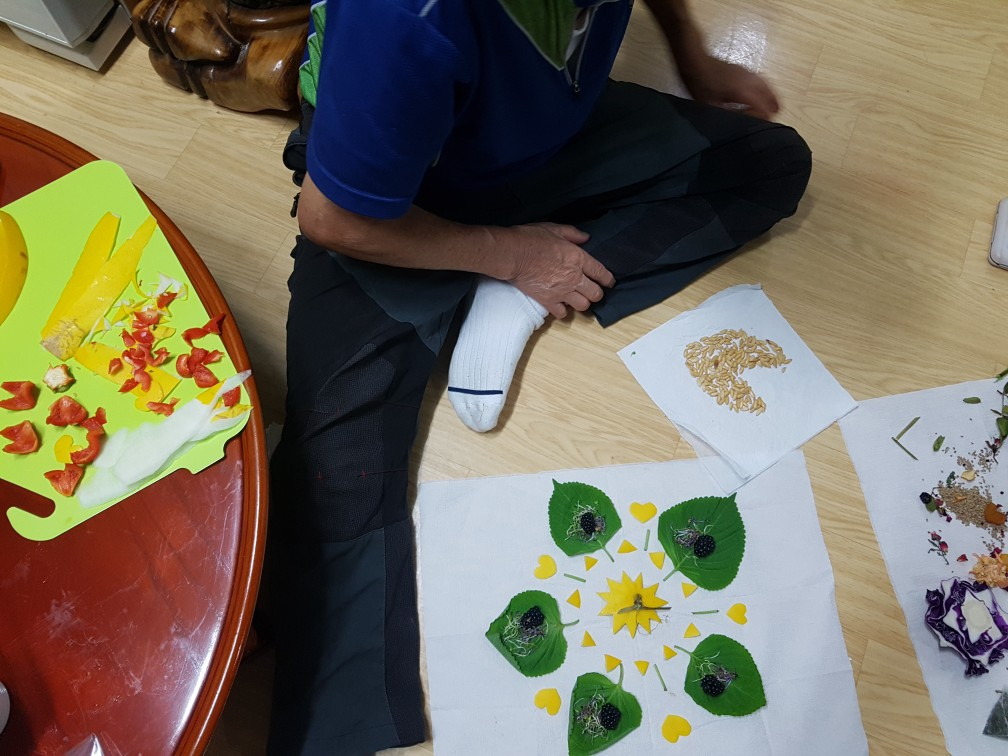
We eat every day of our lives. Since childhood I was especially interested in happiness, and I used to think it would be wonderful if we could practice happiness while eating. Fifty years later, that interest was born as the “Psychology on the Dining Table” series — a table where we eat happiness and health.
Behind the driving force that let me bring the PuNolChi Happiness Table into the world are my beloved and respected parents, so I think I should tell their story first.
Because of the Korean War, my father was separated from his parents at the age of 15 and became the head of his family as a boy. As the eldest son with an unusually strong sense of responsibility, he was a child like an adult — caring for his younger brother and guarding the home for his older sister. Working by day and studying by night, he fought his way into university and began his career as a model teacher, the kind described in education textbooks. He devoted his whole life to growing young dreamers and retired as a school principal. My father became a model of a true teacher, always living an upright life.
With my respected father
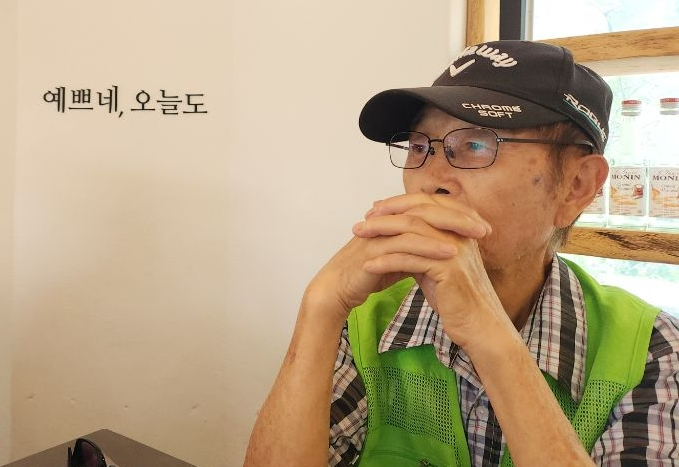
The ideal of Hongik Ingan (meaning “to broadly benefit the world”), which my father always emphasized, was engraved as my life motto from childhood. I held a great dream of spreading that spirit to the world, and that dream is coming to fruition as PuNolChi, the Psychology on the Dining Table.
I began studying expressive arts therapy and psychology in 1996. Teaching happiness studies from 2000, I met countless people.
In particular, the Person-Centered Expressive Arts Therapy founded by Natalie Rogers was a time of fully accepting myself in this very moment and awakening the creativity within me. When she visited Korea in 2007, the chance to learn in her workshop for several days was one of the great blessings of my life.
With Bora at the Natalie Rogers workshop, 2007
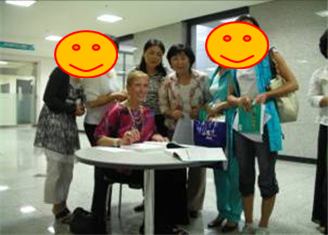
Bora did it — and proved it. Following my guidance, she studied the course three times over and became a shining person, the student who surpasses the teacher. I am always thankful and grateful to her for being a steady, reliable companion for such a long time.
For more than ten years I was immersed in Natalie Rogers’ person-centered expressive arts, and I still take part when time allows. At the 2007 workshop, Natalie showed her own cases and the changed art expressions of her clients, explaining that emotional healing is possible because the very act of expressing releases creative energy. She said that keeping a picture diary — with pencils or crayons — helps us reflect on our inner selves, and that through this process inner healing can happen. I agree with what she said at the workshop: “All the answers God has given us are already within us.”
I sought out the workshops of masters of group counseling to fill my gaps and grow as a professional. And just as long as I was captivated by person-centered expressive arts therapy, I was also fascinated by and studied the theories of Professor Martin Seligman, founder of positive psychology.
I remember when Professor Martin Seligman visited Korea in 2006. It was a stroke of luck to hear his lecture in person. After 20 years of research in positive psychology, Professor Seligman published the book <Flourish>. In Korea, it was translated and republished in a revised edition in 2020 by Professor Woo Mun-sik, who first introduced positive psychology to Korea and invited Professor Seligman here.
Positive psychology and person-centered expressive arts therapy became the theoretical background at the core of Food Expressive Arts Therapy.
Studying positive psychology properly, I learned that being happy does not mean never being sad or never feeling pain. Positive people, in any situation, bring out positive emotions that turn negative thoughts around.
For a long time I have been interested in and studying how to unite theory and practice in daily life so that healing happens within life itself.
In particular, I pioneered a new field of therapy called Food Expressive Arts Therapy by fusing person-centered expressive arts therapy — outstanding in dealing with the human heart — with scientifically proven positive psychology and brain-science theory, which awakens the five senses and brings quick awareness.
Since it is expressive arts therapy that uses food ingredients as its main medium, I thought the name Food Expressive Arts Therapy suited it well. Armed with ten years of expressive arts therapy theory, I was confident about Food Expressive Arts Therapy, and — as teaching and learning help each other grow — I grew further as a professional through thousands of hours of lectures.
Throughout ten years of expressive arts therapy and the 20-year history of Food Expressive Arts Therapy — which leads to a healthy and delicious creative fusion through self-reflection using everyday food ingredients — there have always been faithful companions. Starting with Dr. Kim Min-yong and Dr. Kang Min-ju, they join forces as the association’s vice presidents, branch heads and professional food expression counselors to make the world healthier and more beautiful. I want to express my deep gratitude that today’s progress is possible because of them.
The more I lectured, the stronger my desire grew to spread a healing art of life that unites theory and practice. “If everyone could practice happiness during the time we eat anyway…”
I came to think it would be wonderful if children and adults alike — even without any knowledge of psychotherapy — could have moments of this healing art of life, reflecting on themselves anywhere. That is how the PuNolChi Mind Table was born after a long time, and it is still evolving.
Reflecting on how I used to cut the crusts off bread when making sandwiches — meaning that from now on I will say “Yes~” and eat the crusts too
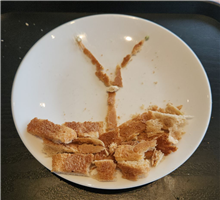
Sometimes I do eat junk food, but with the belief that “what is good for the heart is good for the body,” I set a happy table and eat healthy thoughts.
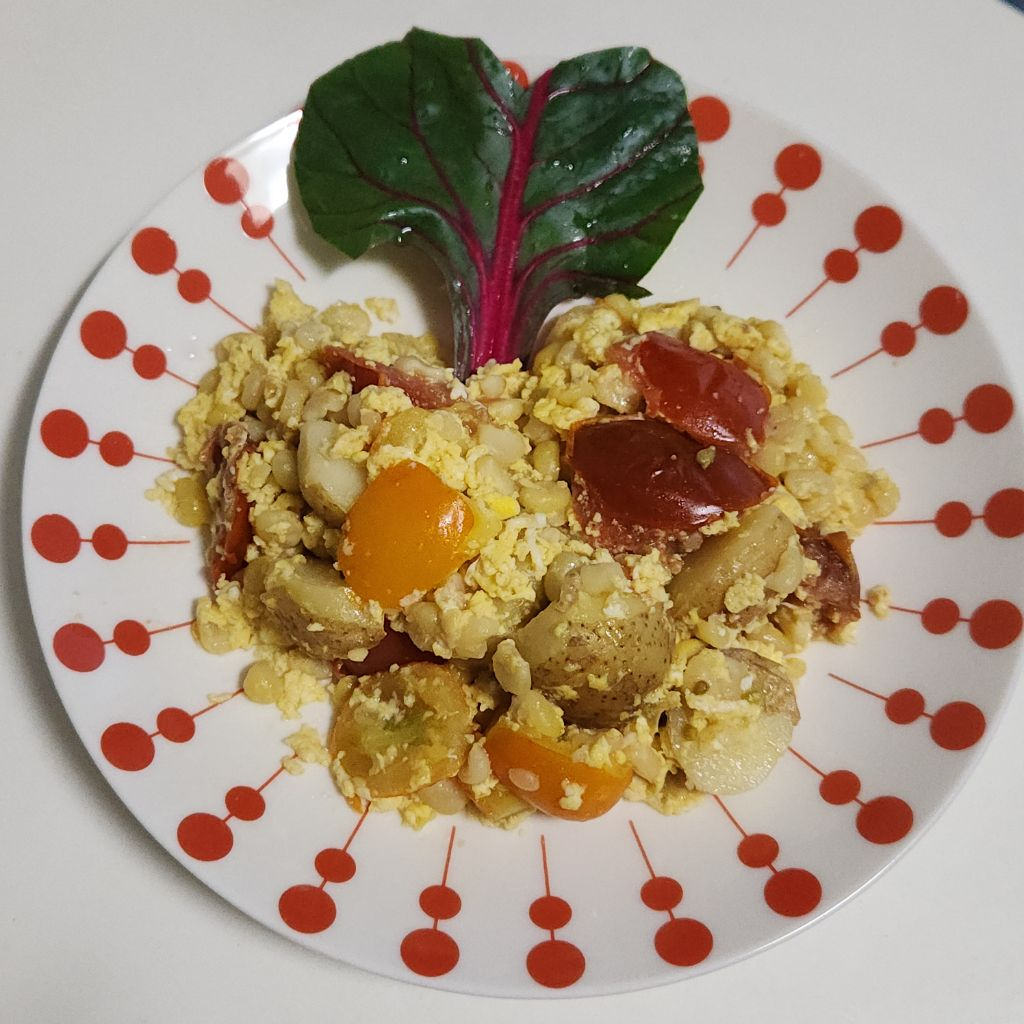
Sometimes, working in the kitchen in midsummer, sweat pours down like rain and I don’t feel like setting the table. That is when I enjoy the PuNolChi Mind Table like play. Then the kitchen becomes as fun as a playground. My works are not as delicate or beautiful as Bora’s. But the moment I imagine an expression, my brain becomes joyfully motivated. I stir-fried potatoes, tomatoes and boiled corn kernels in olive oil, added eggs to make scrambled eggs, and then placed a heart of love for my partner to complete a PuNolChi Love Table.
I put in my wish that my energy would reach him and make him healthy.
Quickly made with tomatoes, good for the prostate — a Love Table seasoned generously with love
I also encourage my neighbors to do the PuNolChi Mind Table in everyday life. My partner practices the PuNolChi Mind Table with the dishes on our table. I am truly grateful to him for gladly going along, because he knows the joy that comes after doing it.
A Positivity Table for a healthy breakfast
When you turn the kitchen into a playground, you work smiling and having fun, and endorphins rise. Working becomes joyful and fun. This is the PuNolChi Mind Table.
To write about the PuNolChi Positivity Table, I made questionnaires for the people around me and encouraged them to practice the PuNolChi Mind Table in daily life. When they practiced Mind Tables that use the strengths of positive psychology — such as a Happiness Table, Health Table, Joy Table and Confidence Table — people changed. You will soon be able to meet it as an e-book and a paper book.
For our flourishing lives, I hope you will meet the tools of the Positivity Table, which let you cook your heart while you eat. I hope that, through the table we face every day, the world can be healed and grow.
So, are you ready to cook your heart?
A Gratitude Table with hearts of love, made with my respected 87-year-old father, who gladly does PuNolChi Mind Table activities together for his 57-year-old daughter struggling with after-effects of a car accident