“We eat health, we eat happiness, we eat joy. Pu·Nol·Chi!”
From summer to late autumn 2019, I spent 20 weeks with seniors in Yeongdong, North Chungcheong Province. The program I designed, PuNolChi, was called “Let’s Play, Food! It Helps Prevent Dementia!”
In this project, a partnership between the Dementia Relief Center of the Yeongdong County Public Health Center and the Korea Food Expressive Arts Therapy Association, Dr. Kim Min-yong led the classes as the main instructor, and two assistant instructors added movement and music at the opening and closing. My thanks to branch heads Hong Song-gwi and Kim Eun-gyeong, who joined us.
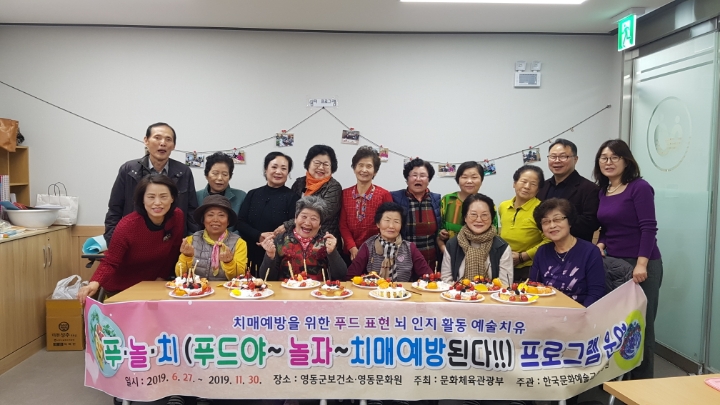
Because this is a path I will follow with deeper interest from now on, I look back on that record as a column and plan for the future.
1. “PuNolChi” in the newspapers
On July 23, 2019, local newspapers introduced PuNolChi in Yeongdong. The Chungcheong Ilbo ran the headline “Yeongdong County’s dementia-specialized program stands out,” reporting “Participants respond to the ‘PuNolChi’ project: emotional stability and better quality of life,” and Jungang Maeil reported “Yeongdong County’s dementia-specialized program draws attention: ‘Let’s Play, Food! It Helps Prevent Dementia.’” It also appeared in the Dongyang Ilbo and Chungcheong Maeil.
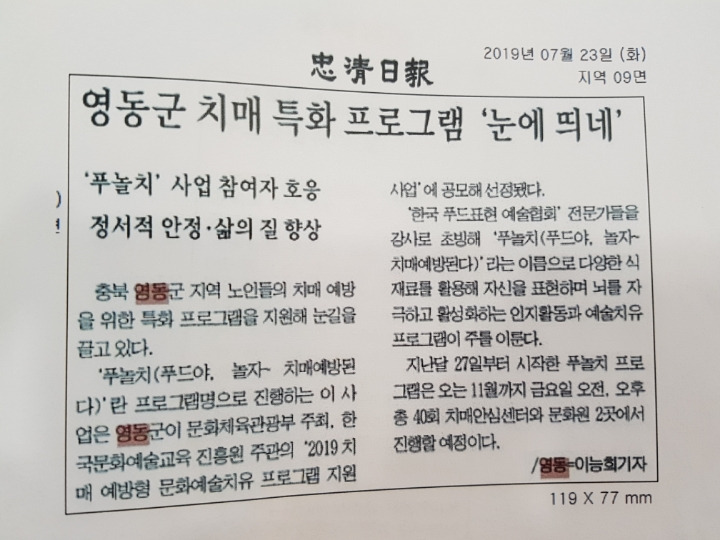
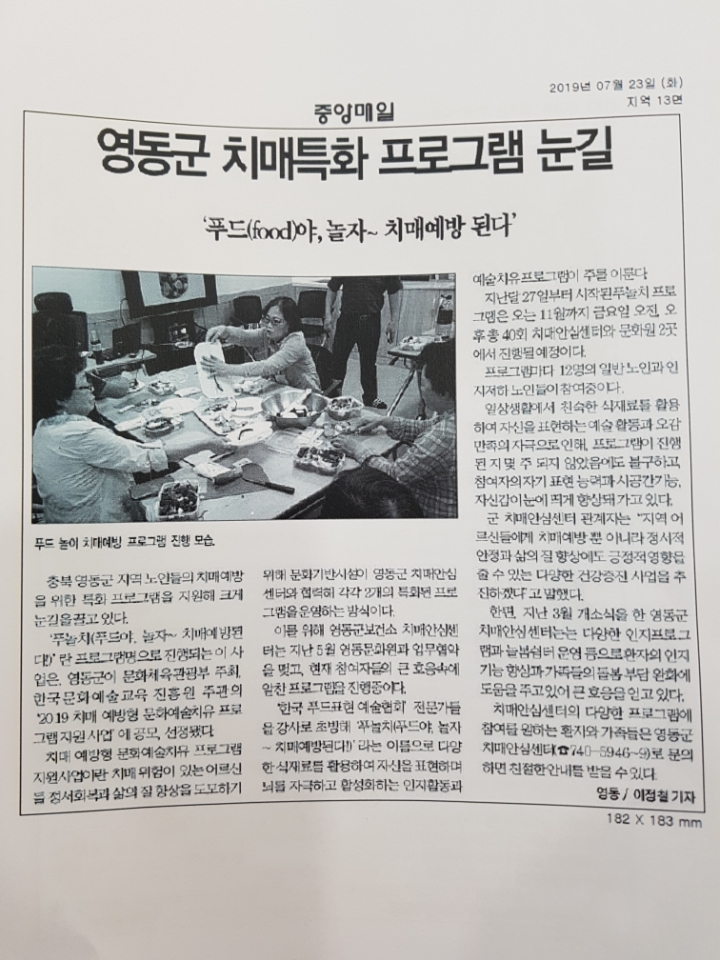
According to the articles, PuNolChi centered on cognitive activity and art healing, in which participants express themselves with a variety of ingredients that stimulate and activate the brain.
2. The project at a glance
- Project
- 2019 Dementia-Prevention Cultural Arts Healing Program (hosted by the Ministry of Culture, Sports and Tourism, organized by the Korea Arts & Culture Education Service, selected through open competition)
- Partners
- Dementia Relief Center of the Yeongdong County Public Health Center, Yeongdong Cultural Center, Korea Food Expressive Arts Therapy Association
- Period
- June 27 to November 15, 2019, 20 weeks
- Schedule
- Every Friday, morning and afternoon classes, at the Dementia Relief Center and the Cultural Center: 40 sessions in all
- Participants
- Around 12 seniors per class, including seniors with and without cognitive decline
- Instructors
- A team of food expression experts from the Korea Food Expressive Arts Therapy Association, led by President Kim Min-yong
- Planning and supervision
- Healing Santa Kim Ji-yu
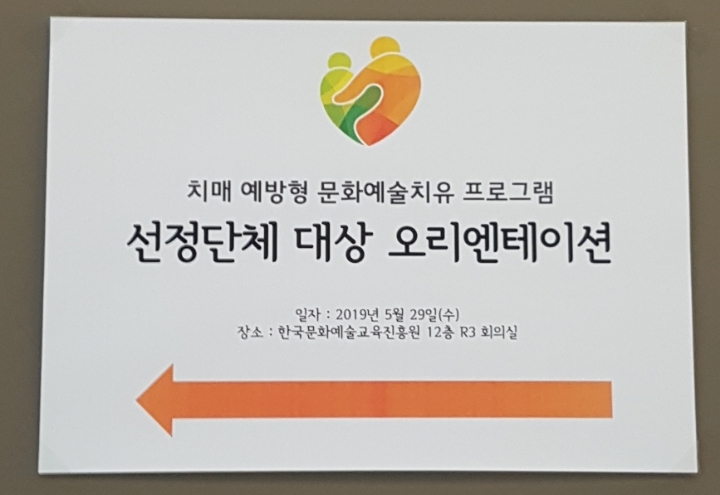
A record still remains of our early-morning study sessions in April 2019. Reading dementia-prevention guidelines and brain-health research together, we designed the program with the wish to “build a healthy society free of dementia.” It was an integrated program that put Food Expressive Arts Therapy, neuroscience and the phytochemicals (plant nutrients) of vegetables and fruit on one plate.
3. What bloomed on the plates over 20 weeks
Yeongdong is a beautiful region rich in fruit and vegetables. The produce of that region became artwork at the seniors’ fingertips.
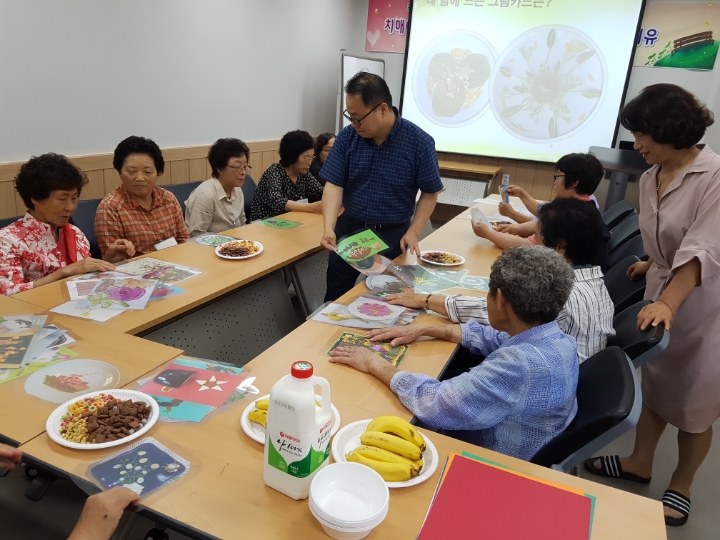
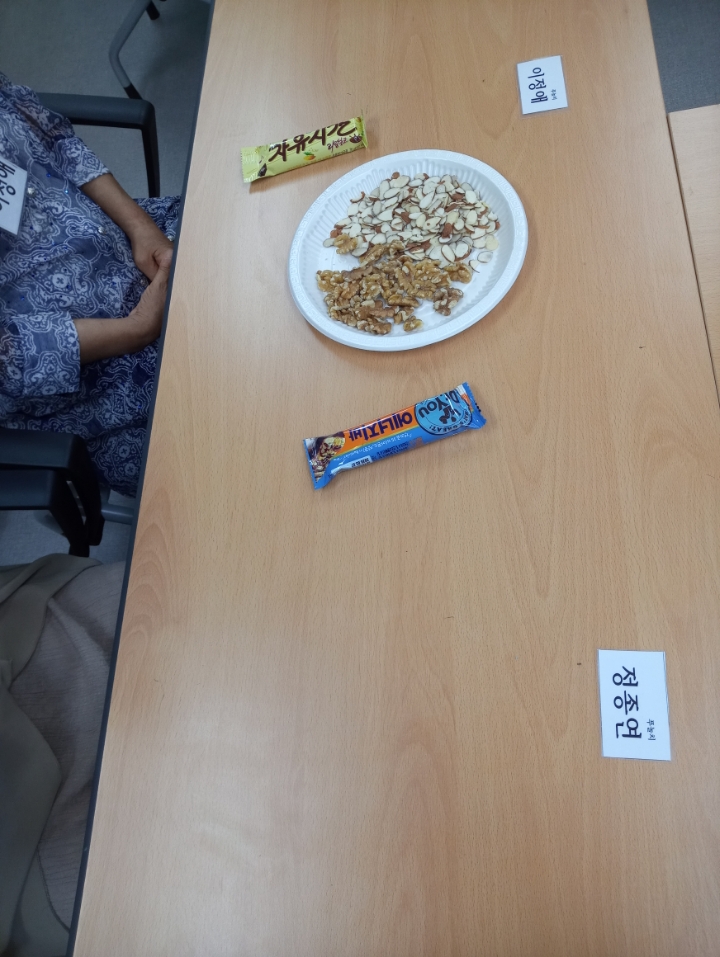
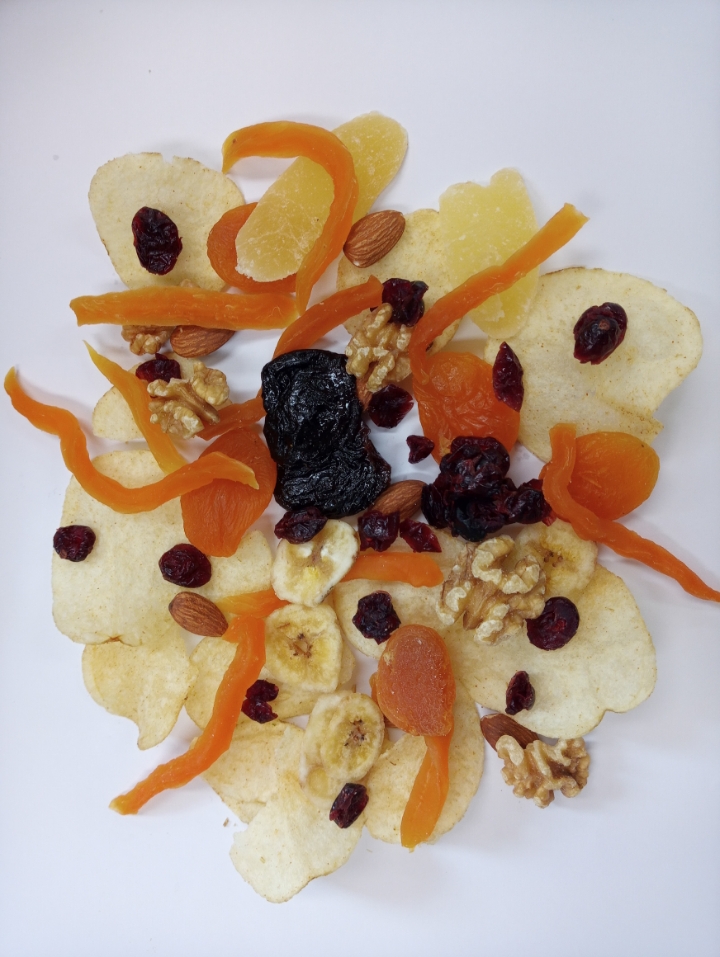
- My happy heart, expressed with nuts
We expressed our hearts with nuts that are good for brain health, then made energy bars and enjoyed them.
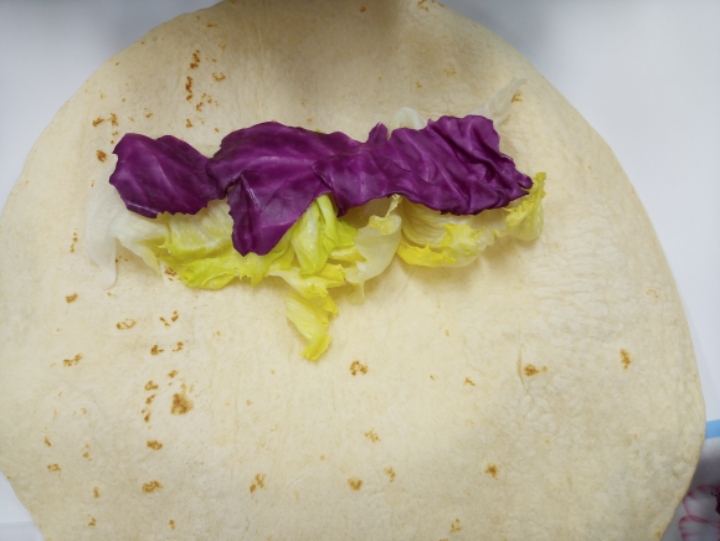
- Rolling a happiness tortilla
It was a time to lay vegetables and fruit on a tortilla and roll up our own happiness to eat.
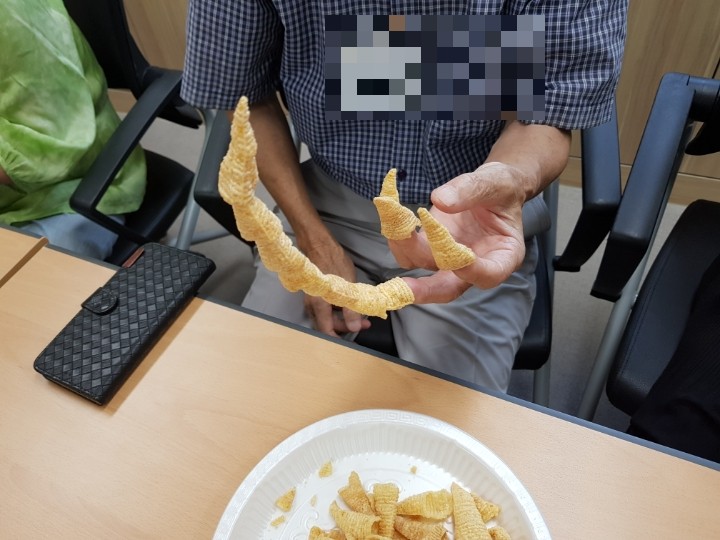
- Putting corn cones on our fingers
We laughed out loud slipping corn cone snacks onto our fingers, then put the feeling of that moment into words.
- A world of imagination
Playing with salt, we shared tastes, textures and the memories they brought back; we expressed the colors that came to mind after meditation, and opened our hearts through “imagination becomes reality” storytelling.
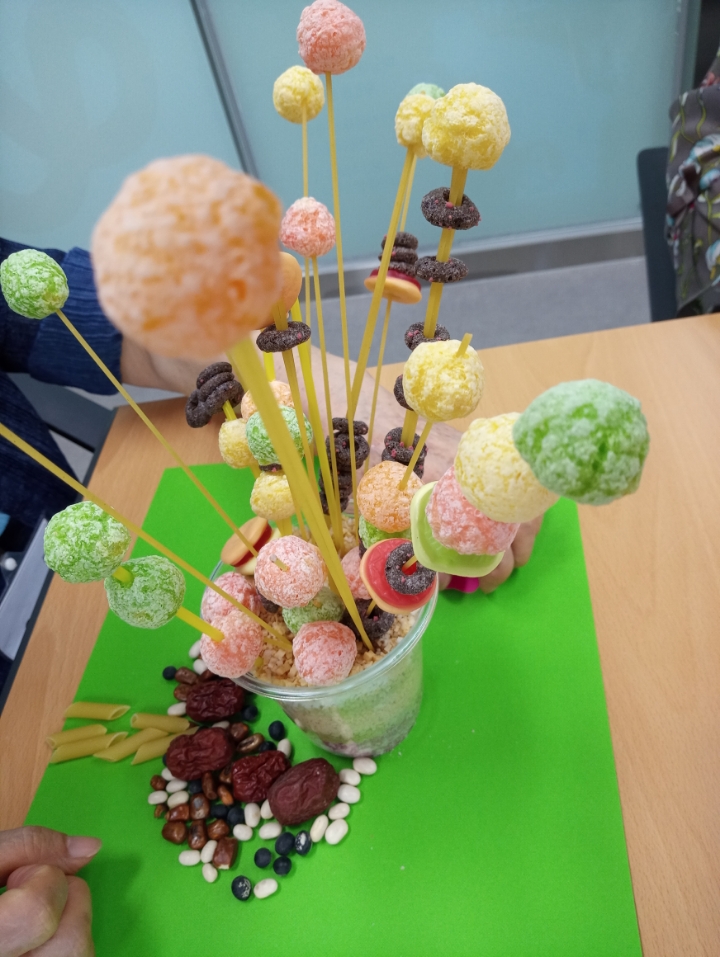
- Positive flower arranging that encourages me
We arranged our pride in ourselves and our self-praise upright, like flowers.
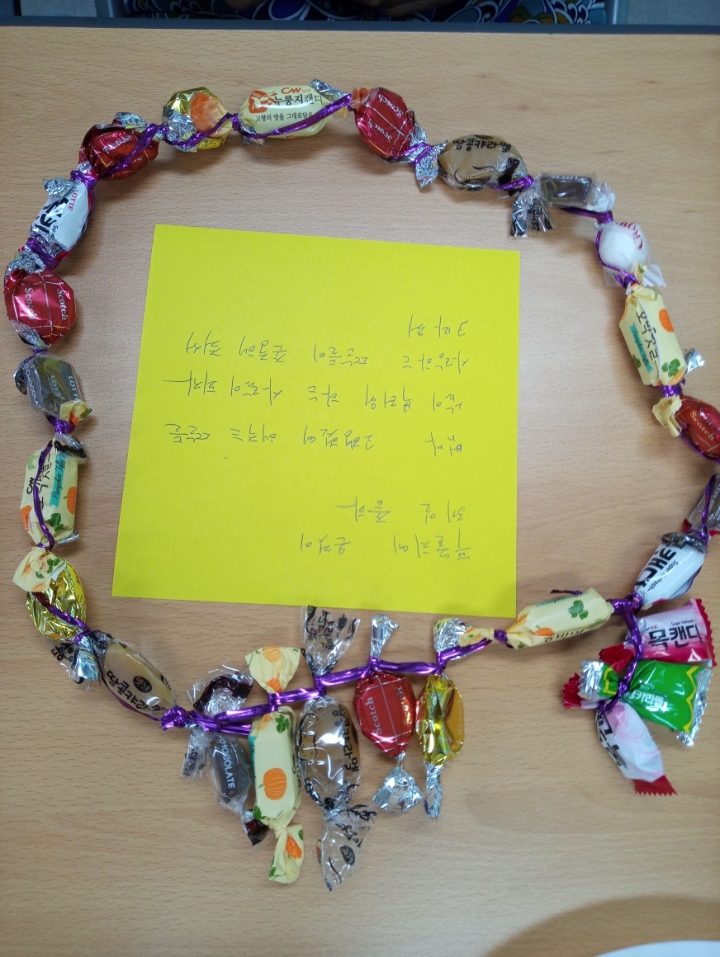
- Making candy bracelets
We shared words of praise and encouragement for ourselves, turned them into candy bracelets and gave them to ourselves as gifts.
4. The seniors changed
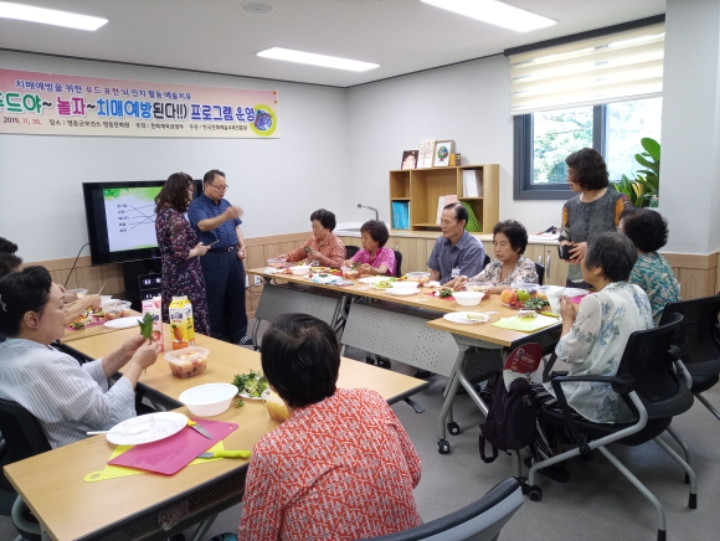
Around the 13th session, the instructors wrote: “We can see their expression becoming clearer and more varied.”
In October, when I visited Yeongdong for supervision, I was amazed to see the seniors’ faces. Everyone looked brighter, and more beautiful.
At the time I was suffering the after-effects of a car accident and mostly kept to quiet activities, but the trip to Yeongdong on an early-morning Mugunghwa train, past fields turning golden, was a great healing for me too. The book I read on that train, “If You Know the Brain, You See Happiness,” confirmed again PuNolChi’s direction of waking up the brain by moving the hands and mouth a great deal.
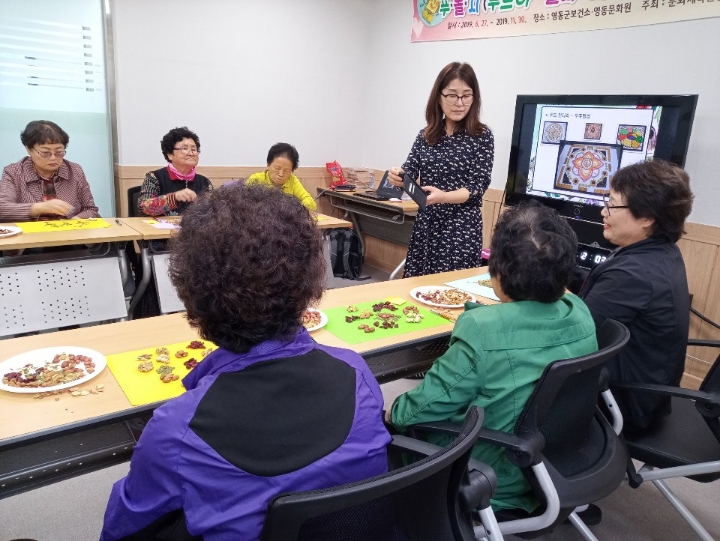
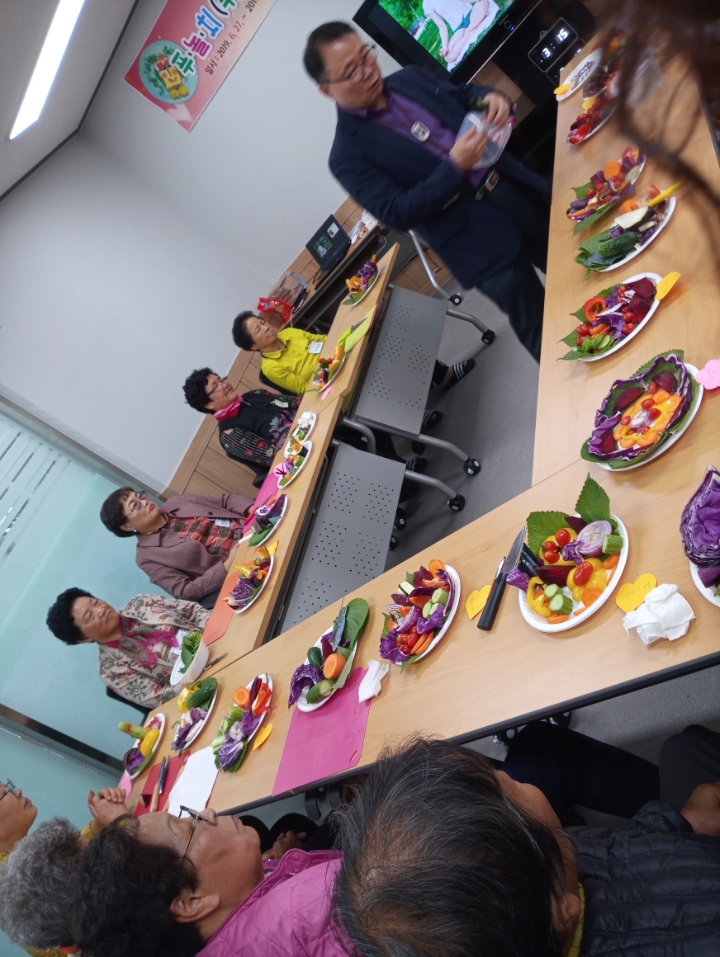
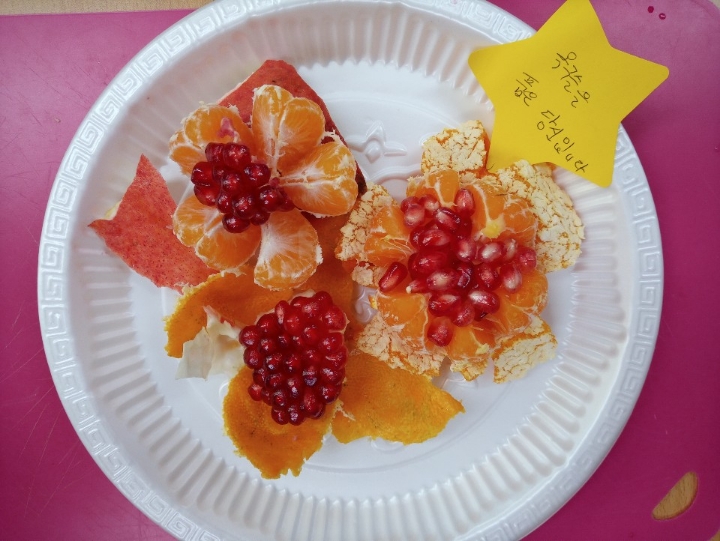
5. The last class: “We eat health, we eat happiness”
On November 15, the 20-week journey came to an end. We eat health, PuNolChi; we eat happiness, PuNolChi; we eat joy, PuNolChi.
We gave the seniors a “Dementia KO Award,” cheering them on to knock dementia out with one punch.
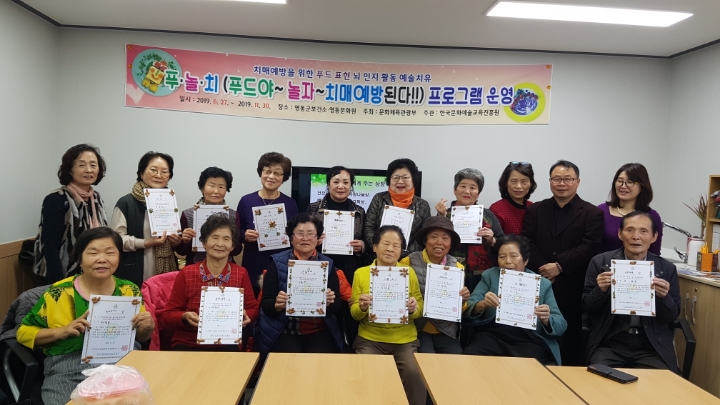
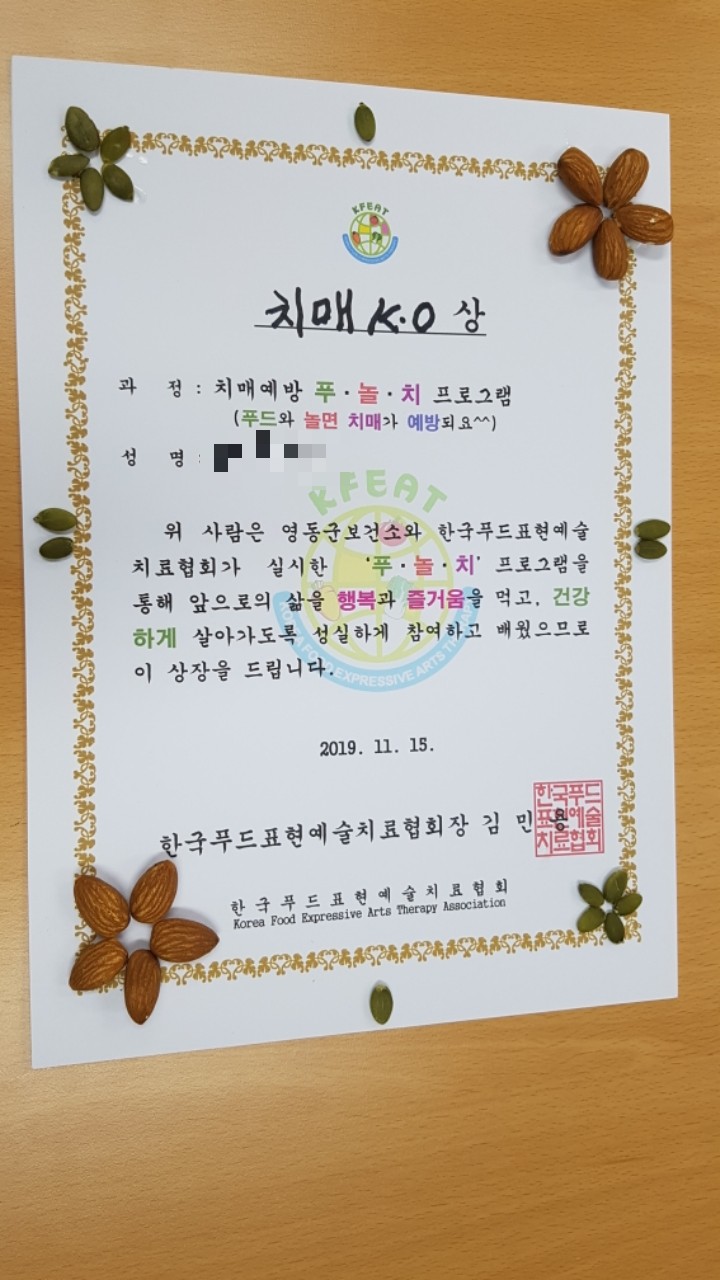
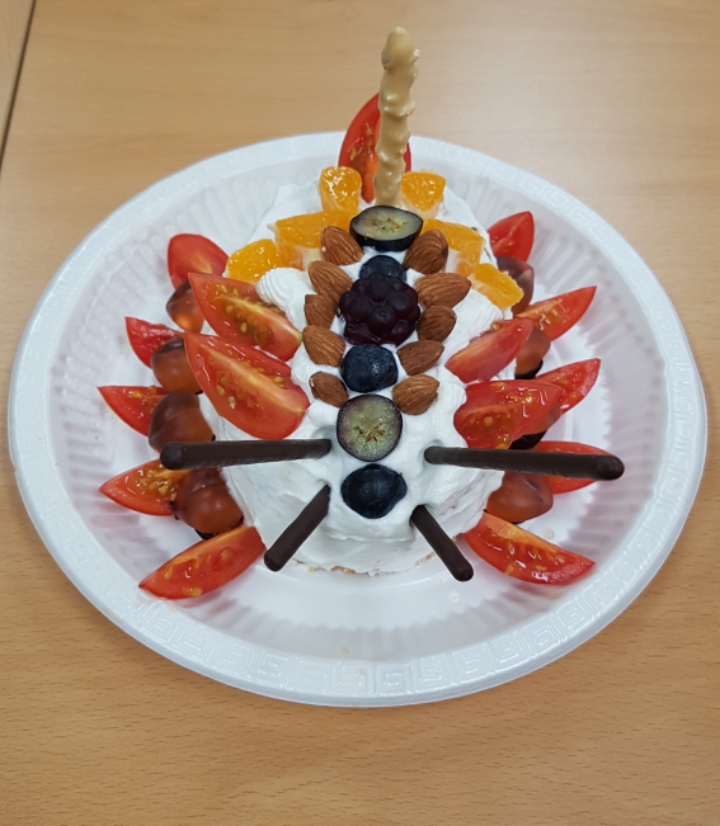
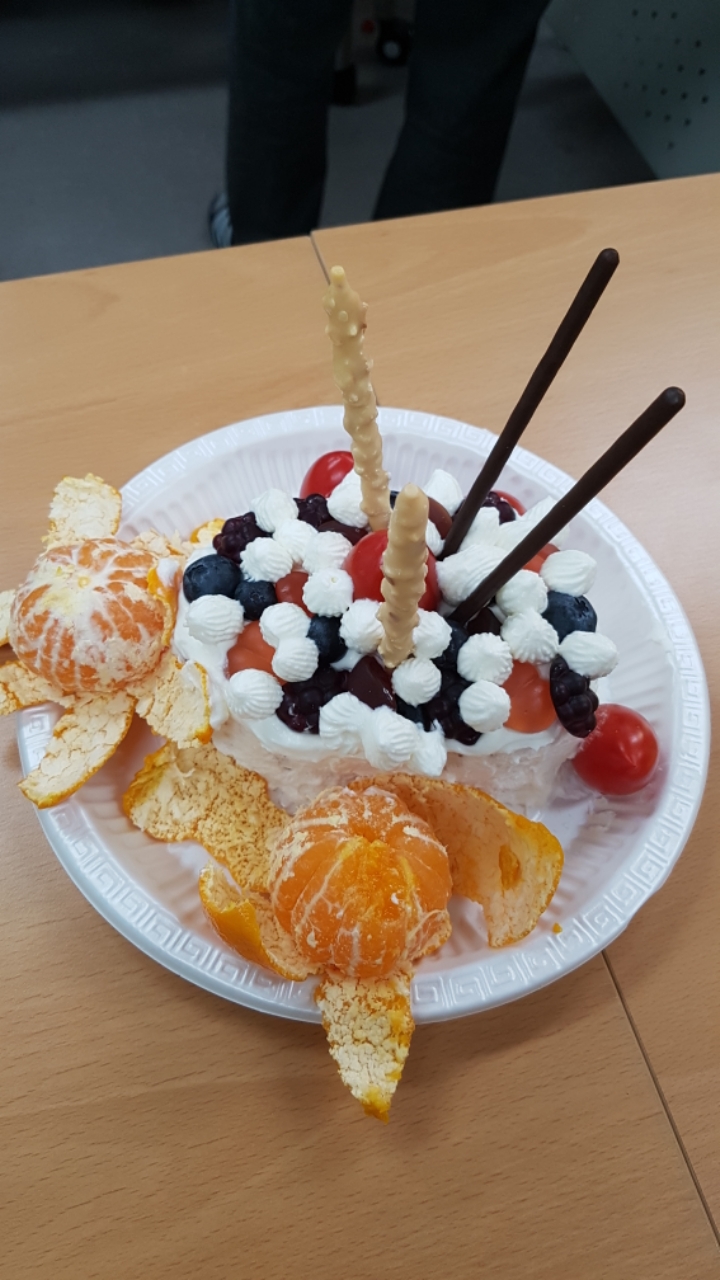
Director Park In-sun of the Dementia Relief Center of the Yeongdong County Public Health Center worked the hardest of all, from preparing the materials to writing the reports. Once again, my deep thanks to President Kim Min-yong, who led the 20 weeks; to expert Kim Eun-gyeong, who came by train from Seoul and added creative ideas; to the director who came from Yongin and wove the seniors’ hearts together with love; and to expert Hong Song-gwi and teacher Kwak Yeon-ju, who joined us.
6. Three things I learned in Yeongdong
The 20 weeks in Yeongdong left me with clear convictions.
7. The path that continued
After that, I never let go of this path.
- 2020
Building on the Yeongdong experience, I opened basic and advanced PuNolChi instructor courses combining Food Expressive Arts Therapy, neuroscience and phytochemicals, and shared them with teachers who want to help people age healthily and beautifully.
- 2021
I opened free food brain coaching classes on Zoom.
- 2025
I shared the PuNolChi Mind Journey at a senior academy for people in their eighties.
- 2026
I continued the PuNolChi dementia-prevention Mind Journey with “big sisters” in their nineties at Dapsimni Catholic Church, and in Paju. Now, together with President Kim Min-yong of the Korea Food Expressive Arts Therapy Association, I am strengthening its neuroscientific basis through a research-paper study group on PuNolChi dementia prevention.
The road ahead
Senior brain coaching is PuNolChi
PuNolChi is not a program that treats dementia; it is a preventive cultural arts healing program that joyfully wakes up the brain and heart at the everyday dining table. Building on the 20 weeks that began in Yeongdong, I now want to refine it into a more systematic senior brain coaching program.
With institutions
To public health centers, dementia relief centers, welfare centers and churches
As in Yeongdong, I will organize senior PuNolChi programs with public health centers, dementia relief centers, welfare centers and churches into courses with session-by-session activities and observation records.
To every family table
PuNolChi Mind Table, five minutes a day
So that seniors can eat health and happiness and keep their own days for a long time, I will bring five-minute-a-day PuNolChi to family tables at home.
See the PuNolChi Academy →Moving our hands with familiar ingredients from the dining table, laughing, talking and praising ourselves: the bright faces of the seniors in Yeongdong became a signpost for the road ahead.
My deep thanks to the Dementia Relief Center of the Yeongdong County Public Health Center, the Yeongdong Cultural Center, the teachers of the Korea Food Expressive Arts Therapy Association, and the seniors who stayed with us to the end of the 20 weeks.
Let’s Play, Food! It Helps Prevent Dementia!
With love, Healing Santa Kim Ji-yu
This story was first posted in the Haengbok Yeolgi activity news board of the healing space Haengbok Yeolgi cafe, woven together with the records of 2019 and edited for this page. The photos are published with the participants’ written consent.